



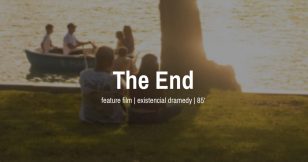
From Vision to Production: When the End of the World Becomes a Story About Human Connection
Discover ‘The End’, a feature film project created for the Film Industry Short Course at ESE Rome, blending...
Read more(image: Professor Alessandro Belluzzo)
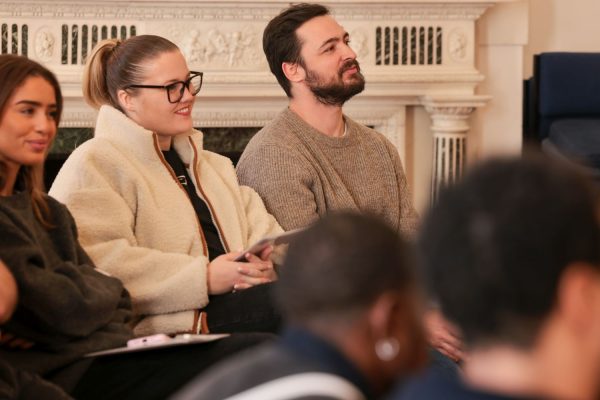
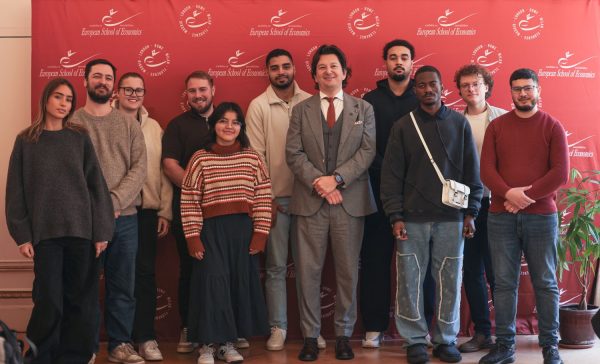
The European School of Economics (ESE) recently welcomed a group of Master’s students from Paris to our London campus—one of our vibrant international hubs—for an intensive three-day Asset Management programme. Conceived as a deeply immersive academic experience, the programme perfectly reflected the ethos of our private university: combining financial theory and strategic thinking with profound human development to offer students a more conscious understanding of wealth in today’s global economy.
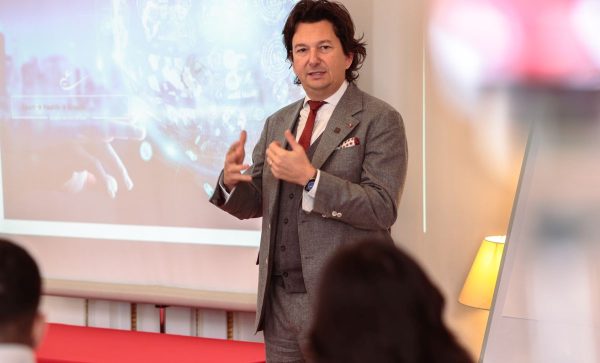
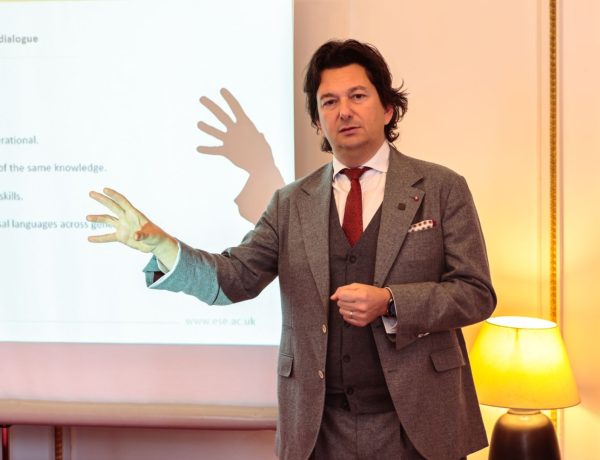
The programme culminated in a powerful masterclass by Professor Alessandro Belluzzo, Director of the Department of Sport & Wealth at ESE, titled “Human Capital.” His intervention invited students taking our business courses to move beyond traditional financial metrics and reflect on a deeper, more enduring definition of wealth.
At the heart of Professor Belluzzo’s masterclass was a clear distinction between economic capital and human capital. While economic capital refers to money and financial assets, human capital encompasses culture, education, language, discipline, health, and, above all, self-awareness.
“Being rich is a financial condition. Being wealthy is the ability to fully enjoy life”, Professor Belluzzo explained.
Financial abundance without physical health, mental clarity, or peace of mind, he argued, does not constitute true wealth. He challenged students with a powerful comparison: a balanced life supported by £100,000 can be wealthier than £10 million accompanied by stress, illness, or inner instability. In this sense, wealth is not measured solely by accumulation, but by integration—the harmony between economic success, wellbeing, and cultural depth.
“There is no wealth without health, nor health without education”, he stated, framing human capital as the invisible source from which visible, tangible results emerge.
Drawing on his lifelong engagement with sport, Professor Belluzzo presented athletics as a strategic framework for leadership, study, and entrepreneurship. Sport, in his view, is not merely physical training, but a disciplined school of life.
“If you integrate your mind, your body, and your knowledge, you become a better person: able to concentrate and create wealth,” he told the students.
Through sport, individuals learn consistency, respect for rules, stress management, and recovery. Just as an athlete must respect training cycles and rest periods, students pursuing a British degree or professional career must recognise their biological and mental limits. Professor Belluzzo shared his own method for peak performance: working in highly focused 20-minute intervals, followed by deliberate pauses to reset attention and clarity. Ignoring these limits leads to exhaustion rather than excellence.
Another central theme of the masterclass was the mechanics of performance. Success is never accidental; it is the result of preparation, awareness, and conscious decision-making.
“If I do X, what is the likely outcome?” he asked, encouraging students to adopt strategic thinking. Risk assessment protects long-term stability. Ultimately, the true indicator of performance is peace of mind. Without it, even the fastest career can crash. Governance, structure, and foresight are essential to preserve both capital and clarity.
Addressing the role of Artificial Intelligence, Professor Belluzzo drew a clear line between information and understanding. AI is a powerful tool for accessing data, but it does not replace human judgment or emotional insight.
“Artificial intelligence amplifies knowledge, but it does not replace it.” The real value lies in the ability to ask the right questions. Human capital is expressed through critical thinking, intentionality, and mentorship—elements no algorithm can replicate within a business school or beyond.
The masterclass concluded with a clear and actionable framework for students and future leaders:
Professor Belluzzo highlighted the fragility of unstructured wealth, citing the frequent financial collapse of professional athletes who possess extraordinary physical discipline but lack educational and financial awareness. True human capital requires both.
This three-day Asset Management programme in London exemplified the distinctive educational vision of the European School of Economics. By placing human capital at the centre of asset management, ESE prepares students not only to manage wealth but to cultivate it consciously.
As Professor Belluzzo concluded, “Develop human capital to create a society where true well-being comes from the harmony of knowledge, health, and wealth.”
Discover ‘The End’, a feature film project created for the Film Industry Short Course at ESE Rome, blending...
Read more
Discover how ESE’s Donatella Lorato, recognized by Forbes Italia as a top 100 woman of success, embodies leadership...
Read more
Discover Ex-Duco at ESE Florence. Our business school empowers students to become teachers, fostering leadership,...
Read more
Scopri come ESE Milano e The Longevity Suite ridefiniscono la leadership attraverso il benessere e la longevità...
Read more