


The Instinct You Cannot Delegate: An Evening With Marcos Marin
Discover how artist Marcos Marin inspired the ESE Rome campus, exploring intuition, visionary leadership, and the human...
Read moreSmart working is no longer an emergency solution. In recent years, it has become a structural element of business organisation and a determining factor in a company’s attractiveness. For Millennials and Gen Z, flexibility is almost never a benefit: it is, increasingly, a basic expectation.
But the real question is not simply whether a company offers remote or hybrid working arrangements.
The deeper question is: what does that model say about the corporate culture?
At the European School of Economics, this question is not theoretical. It is central to the way we prepare our students to enter the world of work.
Today, young professionals do not evaluate an organisation solely on the basis of remuneration.
They want flexibility, but also guidance. Autonomy, but also a sense of belonging.
Digital efficiency, but also human relationships. Companies, for their part, face the same tension. If flexibility becomes the norm, what will really make the difference in 2030? Increasingly, the answer is: culture, leadership and the ability to combine performance with personal growth.
These topics were the focus of the Career Summit in Rome, held on 17 February at Palazzo Lancellotti, ESE’s prestigious headquarters in the heart of the city.
During the meeting, the invited companies highlighted a crucial point: flexibility and freedom in managing time are now perceived as almost a given by the younger generations. However, there is a real risk of losing mentorship and informal learning if hybrid models are not carefully designed.
Flexibility is a powerful tool. But without clear objectives, organisational skills and a culture of responsibility, it can have negative effects. The real competitive advantage today is not offering smart working. It is knowing how to manage it.
It is precisely in this scenario that the ESE plays its role. The European School of Economics does not limit itself to providing a solid academic education. It works to build a concrete bridge between university and business, preparing students for the real dynamics of contemporary work.
The “Preparation for the Workplace” workshop, dedicated to first-year students, is a fundamental first step: developing transferable skills such as time management, effective communication, individual responsibility and the ability to work in hybrid contexts.
This is complemented by Career Summits, company visits, masterclasses and guest lectures, providing opportunities for direct interaction with professionals and companies. Compulsory internships thus become part of a broader programme designed to provide practical tools and awareness.
In an environment where flexibility is increasingly the norm, preparation is what makes the difference.
The European School of Economics is positioned precisely at this intersection between education and the world of work, helping students not only to adapt to change, but to understand and manage it with competence and vision.
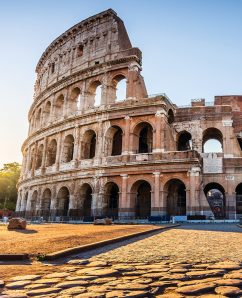
Discover how artist Marcos Marin inspired the ESE Rome campus, exploring intuition, visionary leadership, and the human...
Read more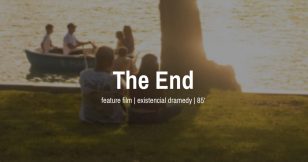
Discover ‘The End’, a feature film project created for the Film Industry Short Course at ESE Rome, blending...
Read more
Discover how ESE’s Donatella Lorato, recognized by Forbes Italia as a top 100 woman of success, embodies leadership...
Read more
Discover Ex-Duco at ESE Florence. Our business school empowers students to become teachers, fostering leadership,...
Read more