



Global Recognition: ESE Milan and the Rise of Europe’s Leading Student Hub
Discover why Milan ranks #1 in Italy in the QS Best Student Cities. Explore ESE Milan’s British-accredited...
Read moreWhat transforms a canvas of pigment into a multi-million-pound asset? Is value born in the isolated genius of the artist’s studio, or is it meticulously engineered within the white-cube galleries and historic townhouses of Mayfair?
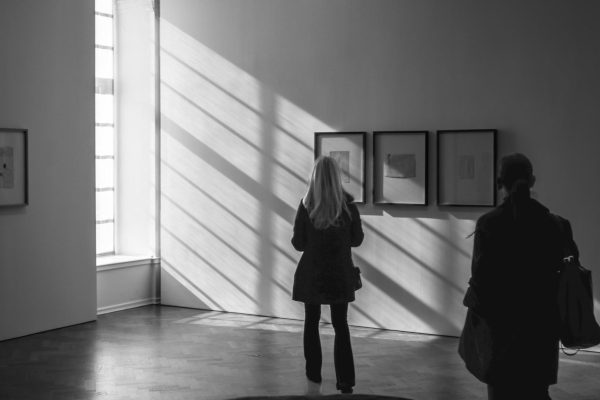
To walk the streets of London’s art district is to walk through the central nervous system of a global economic powerhouse. The contemporary art market is not merely a marketplace of aesthetics; it is an economy of belief, prestige, and power. For students enrolled in the Art Business courses at the European School of Economics (ESE) – an international business school and private university—these streets are not a cultural outing. They are living laboratories.
To master the art business, one must strip away the romanticism and decode the mechanisms of how value is forged, positioned, and ultimately sold.
The global art market operates on a unique financial architecture. It trades on artificial scarcity, provenance, and institutional validation. A gallery is not just a room with art on the walls: it is a strategic enterprise, a brand, and in some cases, a financial instrument. By analyzing Mayfair’s leading galleries, ESE students learn to read these distinct business models in real-time.
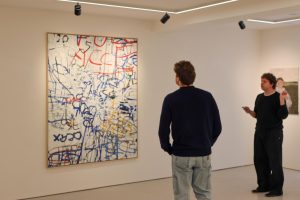
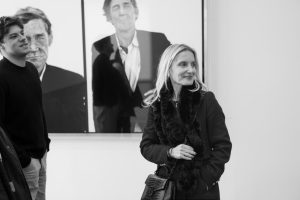
When one crosses the threshold of Thaddaeus Ropac’s Ely House, the lesson is immediate: space dictates worth. The current presentations of Joseph Beuys’s conceptual Bathtub for a Heroine and Constantin Brâncuși’s Photographs are elevated by the palatial, historic surroundings. Here, the gallery deliberately blurs the line between a commercial enterprise and a museum. Students witness how architectural positioning is used to grant museum-level immortality to physical objects. Art is not just hung; it is institutionalized.
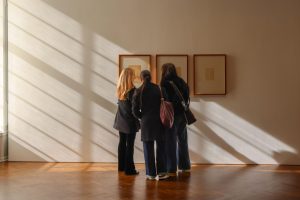
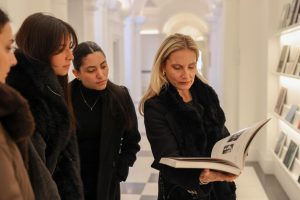
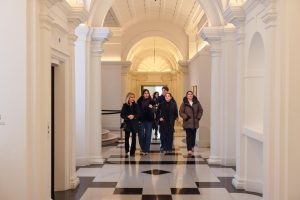
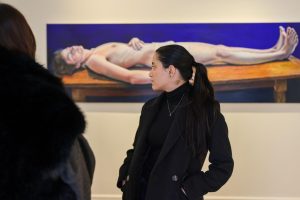
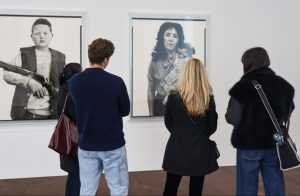
A short walk away, Gagosian presents a masterclass in blue-chip dominance with Richard Avedon’s Facing West. Exhibiting rare, large-format prints unseen since 1985, Gagosian operates on the economics of scale and supreme market confidence. This is the apex of the market, where the international collector network is paramount, and the gallery’s brand acts as a guarantor of trust and liquidity. In this model, the gallery wall functions much like a stock exchange.
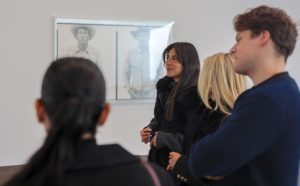
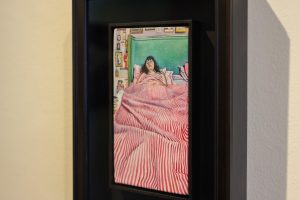
Contrast this heavyweight model with Lyndsey Ingram, where Ishbel Myerscough’s Stay at Home, Save Lives offers a claustrophobic, hyper-realistic exploration of the domestic sphere. Cheekily repurposing the UK government’s pandemic slogan, Myerscough’s visual diary shifts the economic focus from scale to profound intimacy. The business model here relies on a highly selective programme driven by a strong narrative voice. Students learn a vital truth of collector psychology: immense value and fierce loyalty can be generated from storytelling and exclusivity, rather than sheer size.
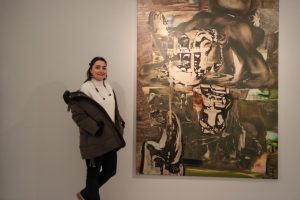
Observing Setareh Gallery reveals the mechanics of risk versus discovery. By championing international artists and expanding a cross-cultural collector base, the gallery positions itself at the frontier of emerging markets. It serves as a reminder that the future of the art market is fluid, constantly seeking the next epicenter of cultural capital.
Understanding gallery models is only half the equation; true market mastery requires direct access to the visionaries who disrupt and write these cultural narratives. Value in the art world is always preceded by cultural relevance.
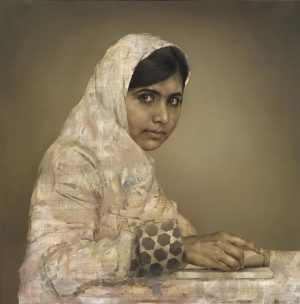
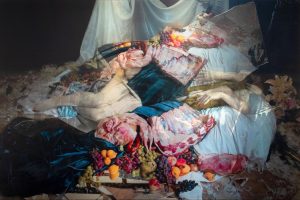
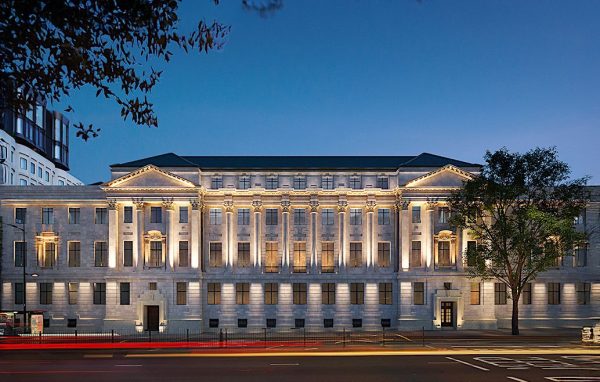
This is vividly demonstrated through ESE’s direct integration with industry leaders like Virginia Damtsa, Curator and Director of Visual Art at Town Hall by Bottaccio. With over two decades of experience running her own gallery in London, Damtsa has worked with visionary artists ranging from Peter Gabriel to Ai Weiwei. Her upcoming inaugural exhibition, HER STORIES UNTOLD, curated in partnership with The Circle, brings together the work of leading international artists, including Jonathan Yeo’s piercing portraits and Conrad Shawcross’s sculptural interventions.
For ESE students pursuing a British degree or specialised training, this connection is proof of access. It provides a real-time case study in how high-level partnerships, philanthropic alignment, and curatorial audacity actively challenge known narratives to create new market value. Engaging with figures like Damtsa allows students to peer into the engine room of the art world, witnessing how the cultural zeitgeist is manufactured before it is monetized.
Across all our international campuses, the European School of Economics gives students direct exposure to these elite environments. They do not read about market dynamics in textbooks; they breathe the oxygen of the market. They learn to read art as an asset class, navigate the psychology of the elite collector, and build networks inside closed cultural ecosystems.
The art world is not only about beauty. It is about vision, positioning, and the unique ability to shape both cultural and economic reality. To lead in this industry, one must be as fluent in the language of capital as they are in the language of aesthetics. This profound connection between inner vision and outer economics is at the very core of the ESE philosophy. As ESE Founder and President, Elio D’Anna, states:
“Beyond the financial skyscrapers, the industrial pyramids,
beyond the discoveries and achievements of science
and everything that as humanity we consider beautiful, useful and true,
there is always a man’s dream.
Economics is the art of dreaming.
It is the ability to transform the impossible into possible and then into inevitable.
Only a humanity educated in the art of dreaming, in beauty, in truth,
only a dreaming, intuitive humanity can project 0
a more just world, a richer economy, a brighter future.”
At the European School of Economics, the study of Art Business is not confined to the classroom; it is an education in this very art of dreaming, unfolding within the institutions that define the global art market.
Discover why Milan ranks #1 in Italy in the QS Best Student Cities. Explore ESE Milan’s British-accredited...
Read more
Discover ‘The End’, a feature film project created for the Film Industry Short Course at ESE Rome, blending...
Read more
Master entrepreneurship with ESE. Learn to build a startup, leverage AI, and master the pitch in our intensive course....
Read more
Discover why summer is the best time to study at ESE Milan. Explore internships, networking, and a vibrant global...
Read more