


ESE Milan: Cross-Culturality at the Heart of the Campus
Discover how our business school in Milan fosters cross-culturality. With 23 nationalities, experience visionary...
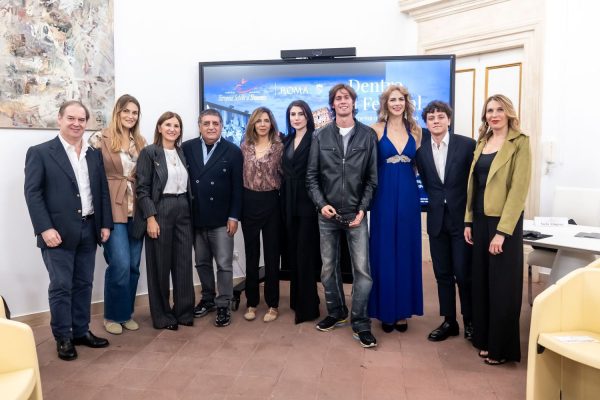
Read moreDuring the Rome Film Fest, the European School of Economics (ESE) Rome campus opened its doors to leading professionals from the film industry for an evening of discussion on the future of cinema. The panel, Inside the Festival – Cinema Beyond the Screen (Dentro il Festival – Il cinema oltre lo schermo), was curated by Olimpia Colonna di Paliano, Head of External Relations and Institutional Affairs at ESE Rome, and moderated by journalist and author Lucilla Quaglia.
The event brought together different perspectives from the creative and production sectors, featuring Federico Lobuono, President of La Giovane Roma; Alessia Alciati, Film Director and Founder of About Eve; Luigi De Filippis, Film Producer; Janet De Nardis, Film Director and Actress; and Andrea Pittorino, Actor, alongside other guests from the industry.
Through an engaging conversation, the panel explored how cinema is evolving, the challenges facing its professionals and the opportunities that will shape the next generation of filmmakers.

At the heart of the discussion was a fundamental question: what makes cinema irreplaceably human?
Janet De Nardis highlighted the enduring importance of film as a cultural reference point, while the panel reflected on cinema as an art form driven by emotion, imagination and the passion of those working behind the camera.
Artificial Intelligence was another central topic. As new technologies increasingly influence pre-production, visual effects and storytelling, the speakers considered the boundaries between technological innovation and human creativity.
While AI can accelerate technical processes, analyse information and support creative production, the ability to question, imagine and develop an original vision remains fundamentally human.
Philosophy, curiosity and the courage to explore new perspectives emerged as essential qualities for those who will shape the future of cinema.
The conversation also addressed one of the industry’s most pressing challenges: creating opportunities for emerging filmmakers, actors and creative professionals.
Drawing on their professional experiences, Andrea Pittorino and Luigi De Filippis highlighted the difficulties young talents face when entering an increasingly competitive industry.
The panel examined the differences between the European and American film ecosystems, particularly in terms of investment, funding and support for emerging talent. While the American industry often provides greater opportunities for original ideas and new creative voices, European funding structures can be more cautious, frequently favouring established professionals and proven production models.
Supporting the next generation requires more than recognising talent. It calls for investment, entrepreneurial vision and a stronger commitment to opening the industry to new perspectives.
Giving young creatives the opportunity to experiment, develop their ideas and bring original projects to life is essential to ensuring cinema’s continued evolution.
Beyond its artistic dimension, cinema is also a complex international industry shaped by business strategy, investment, production, technology and distribution.
The discussion highlighted the importance of understanding these dynamics and the need for professionals who can connect creative ambition with managerial and entrepreneurial skills.
Building on the themes explored during the panel, ESE announced a forthcoming event dedicated to the film industry, focusing on production processes, emerging technologies, market challenges and international distribution models, both in Italy and worldwide.
This connection between creative vision and business strategy lies at the heart of the ESE MBA in Film Industry Management, a programme designed to explore the managerial, entrepreneurial and strategic dimensions of the global entertainment industry.
At the European School of Economics, cinema is recognised both as a powerful art form and as a global business that requires visionary leadership, strategic thinking and an entrepreneurial mindset.
ESE has consistently created opportunities for students to engage directly with leading figures in international cinema, including legendary Oscar-winning director Oliver Stone, offering first-hand insights into the creative and professional worlds shaping the entertainment industry.
By combining business education with exposure to the creative sectors, ESE aims to prepare future professionals to navigate an industry undergoing profound transformation.
Because the future of cinema will not be shaped by creativity alone, but by those who have the vision, knowledge and courage to turn new ideas into reality.

Discover how our business school in Milan fosters cross-culturality. With 23 nationalities, experience visionary...
Read more
Discover how ESE alumna Salima Makhloufi blends tradition and AI to transform her family’s business. A true example of...
Read more
Discover how artist Marcos Marin inspired the ESE Rome campus, exploring intuition, visionary leadership, and the human...
Read more
Discover ‘The End’, a feature film project created for the Film Industry Short Course at ESE Rome, blending...
Read more