


The Instinct You Cannot Delegate: An Evening With Marcos Marin
Discover how artist Marcos Marin inspired the ESE Rome campus, exploring intuition, visionary leadership, and the human...
Read moreSalima Makhloufi grew up in the olive oil business her father started with a small mill. After studying AI for Business at ESE, she is going back as Chief Operating Officer, with a plan to open an innovation and AI lab.
Alt tag: Smiling Salima Makhloufi, ESE AI for Business student, beside a prompt to watch her story on YouTube.
Salima Makhloufi did not grow up surrounded by code or algorithms. She grew up surrounded by olive trees.
“My first smell was freshly pressed olive oil,” she says, “and my father teaching me what good quality is.”
Her father started the company in 1997 with a small mill. She has watched it grow into what she describes as Africa’s largest exporter, present in more than 50 countries. Today it is CHO Group, the Tunisian olive oil producer behind the Terra Delyssa brand, and Salima and her sisters are the second generation.
What made the difference, she says, “wasn’t just tradition. It was the ability to adapt, to structure and to scale.”
“That’s when it clicked for me that if you don’t integrate technology, you will stay behind no matter how good your product is. That is why I decided to begin my journey in AI, not to replace what we have, but to elevate it.”
Her background is in electrical engineering and renewable energies, and she worked in digital transformation consulting before joining the family business as Sales Manager.
At ESE, Salima studied AI for Business. What stood out, she says, is that “it wasn’t just about theory. It was about the application of AI in your business.”
The course was not teaching her how to become an engineer. It was teaching her how to use AI as a business tool. The class worked on real business cases and constantly connected strategy to technology, which in her words “made AI feel accessible and actionable”.
The people in the room shaped her thinking too. She describes ESE as a very international and entrepreneurial environment.
“Being surrounded by people from different countries and industries pushed me to think globally,” she says. “There is no one size fits all transformation. You need to think about how to adapt it to different cultures and contexts.”
CHO Group holds information at every step, from the olive fields to the final packaging. Until now, she says, decisions were often intuitive or reactive. Her plan is to gather data on harvest quality, production time and customer behaviour, and to use AI to decide better.
“The frameworks I learned gave me the ability to turn our insights into data, and our data into decisions.”
She does not expect AI to replace the farmer or the mill expert. Their knowledge is valuable but usually unstructured, and AI can formalise it across generations so nothing gets lost. And the people come first: “If you have good technology but your people don’t trust or understand it, nothing is going to change.”
Salima now returns to CHO Group as Chief Operating Officer. One of her missions is to open an innovation and AI lab that will implement AI across the company’s value chain. In five years, if it succeeds, she might open an AI consulting firm to help other companies.
“I came to the European School of Economics to understand AI, but now I’m leaving understanding how to make it useful,” she says. “They don’t limit you. They push you to rely on yourself and share what you think.”
Her last word is for her father. “He has been behind me in every step of my career, pushing me to experience new things. I hope that one day I will make him as proud as he has always made me.”
Want to put AI to work in your own business? Explore AI for Business at ESE or speak to an admissions advisor now.



Discover how artist Marcos Marin inspired the ESE Rome campus, exploring intuition, visionary leadership, and the human...
Read more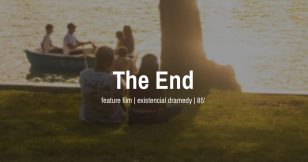
Discover ‘The End’, a feature film project created for the Film Industry Short Course at ESE Rome, blending...
Read more
Discover how ESE’s Donatella Lorato, recognized by Forbes Italia as a top 100 woman of success, embodies leadership...
Read more
Discover Ex-Duco at ESE Florence. Our business school empowers students to become teachers, fostering leadership,...
Read more