


Pictures of You: loving yourself as the first investment in your future
Explore ESE’s Picture Day. Discover how our business school helps students build confidence, self-love, and...
Read moreAt ESE the EX-DUCO programme empowers students to become teachers: sharing their skills, passions and expertise with their peers.
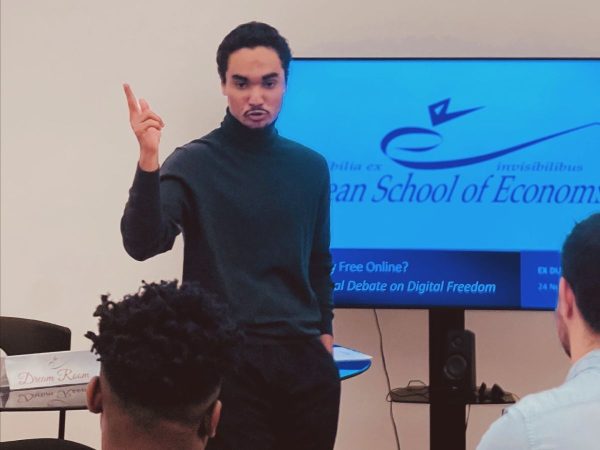
Mftah Alzadimah’s Ex Duco session was on “A Philosophical Debate on Freedom in the Digital Age.”
This sparked a vibrant discussion: are we truly free in a hyper-connected world? or does technology limit us more than we think? A thought provoking and engaging session.
We asked Meftah what inspired him to choose this topic.
I chose Freedom in the Digital Age as the topic for my ex duco session because it’s something that quietly shapes almost everything we do, yet we rarely stop to question it. We spend hours online every day, sharing opinions, forming identities, staying informed, without asking who controls these spaces or what “freedom” actually looks like within them. I wanted to create a moment where we could pause, step back, and think more consciously about the digital world we move through so easily.
Going into the session, I didn’t have a fixed message I wanted to deliver. Instead, I was curious about how others experience digital freedom in their own lives. Is it empowering? Restrictive? Somewhere in between? I hoped the discussion would feel open rather than academic, and that people would feel comfortable speaking from personal experience, even if their thoughts were still messy or unfinished.
The conversation turned out to be more engaging than I expected. People shared honest reflections about social media, privacy, online pressure, and the feeling of constantly being connected. Some spoke about how digital platforms have given them a voice, allowed them to connect across borders, or engage with political and social issues more actively. Others described a sense of exhaustion or unease, the pressure to be visible, the fear of being judged or the awareness that our data is always being tracked in the background.
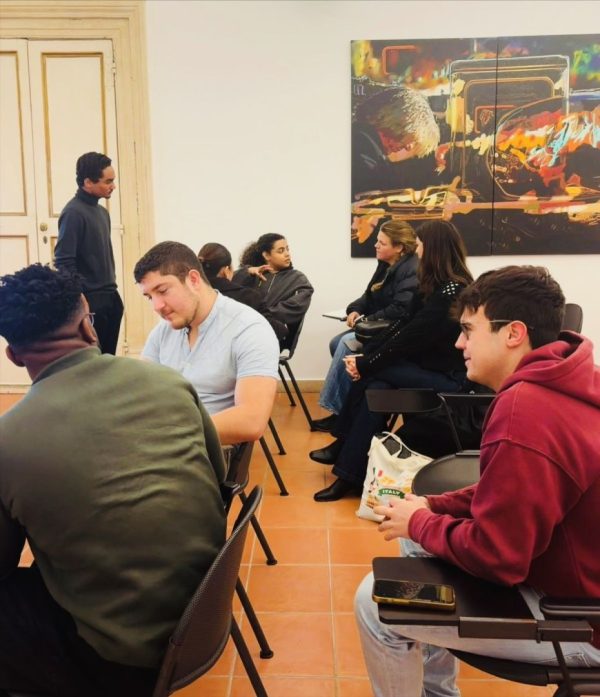
What stood out most was how clearly different backgrounds shaped people’s views. Students from countries where online spaces are more controlled or monitored often saw the internet as a valuable space for expression and access to information. For them, digital freedom felt precious, even fragile. Meanwhile, others, especially those who grew up with constant internet access, were more skeptical, focusing on the power of big tech companies, algorithms, and the subtle ways choice can be shaped without us noticing. These contrasting perspectives didn’t clash. Instead, they added layers to the discussion and pushed everyone to think beyond their own experience.
As the conversation unfolded, it became clear that freedom in the digital age isn’t something we can define in one sentence. It depends on where you live, what you’ve experienced, and how technology intersects with power and responsibility. What I appreciated most was the way people listened to each other. The discussion didn’t feel rushed or competitive. Instead, it created space for reflection, doubt and genuine curiosity.
I left the session feeling that the real value wasn’t in reaching conclusions, but in asking better questions. The conversation sparked critical thinking, encouraged people to reconsider assumptions and highlighted how complex and personal digital freedom really is. In that sense, the discussion itself felt like an expression of freedom: open, thoughtful, and shaped by many voices rather than one.
As ESE Founder and President Elio D’Anna, reminds us: the root of “educate” comes from the Latin ex-duco: to bring out. Exduco sessions allow students to bring out their originality and reveal the beauty of their uniqueness: their dream.
Explore ESE’s Picture Day. Discover how our business school helps students build confidence, self-love, and...
Read more
Discover how our business school students explored the historic Palio di Siena. An immersive journey into Tuscan...
Read more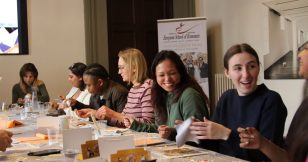
ESE Florence students explore the art of gold leaf at Giusto Manetti Battiloro. Discover our business school’s...
Read more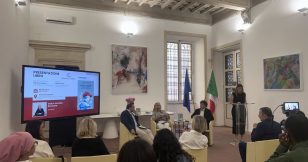
ESE Rome hosts the presentation of ‘Vestire le parole’. Discover how our business school blends elite...
Read more