


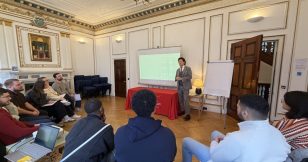
Redefining Wealth: Human Capital in ESE’s Asset Management Programme
Discover ESE’s Asset Management programme in London. Prof. Belluzzo redefines wealth by blending financial...
Read moreAs we step into 2026, the global spotlight is fixed firmly on Milan, the economic heart of Italy and the primary host city for the XXV Olympic Winter Games, running from February 6th to 22nd. The Milano Cortina 2026 Games are not merely a celebration of sport; they represent a significant economic catalyst, a masterclass in large-scale project management, and a unique opportunity for global engagement. For prospective students seeking a world-class business education in an environment pulsating with international momentum, the European School of Economics (ESE) Milan Campus offers an unmatched vantage point.
Milan has long been recognised as the preeminent Italian city for Finance, Design, and Luxury Goods. ESE Milan’s programs, including the BSc (Hons) Business Administration: Management and specialised Professional Programmes in Fashion & Luxury Goods Management and Marketing, are uniquely positioned to leverage this cosmopolitan environment.
The preparation phase for the Olympics offers students an invaluable case study in event management and logistics, observing the coordination of a multi-venue, international event, from security to media relations, provides practical insights into large-scale operations. It has also benefitted from strategic marketing and global branding, with the campaigns of official sponsors and the national branding efforts surrounding the Games. Last but not least, examining the “Impact 2026” social procurement program, which favours small, micro, and social businesses, allows for an in-depth study of ethical supply chains and inclusive economic growth.
Mega-events such as the Winter Olympics serve as powerful engines for economic and infrastructural development. The Milano Cortina 2026 Games are projected to generate a substantial €5.3 billion economic impact for Italy, with a significant portion allocated directly to Lombardy and the city of Milan. Substantial funds, including an estimated €471 million for Lombardy, are dedicated to upgrading critical infrastructure, notably enhancing rail connectivity and modernising Milan’s metro system. These improvements create a lasting legacy, enhancing accessibility and efficiency for residents and businesses long after the Games conclude.
The event is expected to attract over 2.5 million spectators and a global broadcast audience of 3 billion. This influx stimulates immediate economic activity in hospitality, retail, and food & beverage sectors, followed by an anticipated long-tail tourism growth extending 12 to 18 months post-Games. The organising committee has committed to a comprehensive Sustainability, Impact, and Legacy Strategy, focusing on topics like circular economy, gender equality, and sustainable local economic development. This focus aligns perfectly with modern business ethics and the principles of Corporate Social Responsibility (CSR).
The educational philosophy of ESE, Visibilia ex Invisibilibus (The visible from the invisible), encourages students to look beyond the surface; to see the ideas, dreams, and ethical foundations that underpin success in the corporate and economic world. Studying in Milan during this extraordinary period allows students to witness vision in action, observing how the grand vision of hosting the Games translates into tangible infrastructure projects and economic outcomes. Students can also engage with global leaders, given the increased presence of international business leaders, media, and diplomats, enhancing networking and internship opportunities; a cornerstone of the ESE pragmatic approach.
For students at the European School of Economics, the Milan Campus offers direct exposure to the dynamic forces shaping this momentous occasion. The city’s pivotal role in hosting and managing a global spectacle provides a living laboratory for business, finance, and marketing students.
Choosing the ESE Milan Campus places you at the epicenter of international business and cultural transformation. The energy, investment, and global focus generated by Milano Cortina 2026 offer an educational backdrop that cannot be replicated.
Discover ESE’s Asset Management programme in London. Prof. Belluzzo redefines wealth by blending financial...
Read more
ESE Florence business school students meet Fiorentina Women. An event on leadership, dreams, and sports marketing.
Read more
Prof. Belluzzo joins ESE as Director of Sport & Wealth. He will lead new programs in sport management and wealth...
Read more